Finding the “Why” Behind Performance Changes with Foglight
When performance shifts and it’s unclear what changed, this session shows how to break it down using Foglight. It focuses on using Change Tracking and Comparison in Performance Investigator to align configuration, schema, execution plan, and system changes with performance timelines, correlate performance degradation to environmental or workload changes, and compare time periods to identify new, missing, or altered SQL, users, and activity. The result is a more direct, evidence-based root cause analysis approach that narrows investigation to what actually changed.
Foglight solves common challenges
Manage multiple platforms
Performance #1 responsibility
Improved resolution time
Faster database troubleshoot
When a critical database issue occurs, every minute spent investigating increases downtime risk. Foglight automatically connects alarms, SQL activity, infrastructure metrics, and performance data so teams can quickly identify root causes, reduce troubleshooting time, and restore service faster before users and applications are impacted.
Broader access to database insights
Critical operational insights are often locked behind specialized tools and database expertise. Foglight helps teams quickly access the information they need through intuitive dashboards, role-based experiences, and conversational investigations, reducing dependency on DBAs and accelerating decision making across the organization.
Connect technical issues to business impact
Not every alert deserves the same level of attention. Foglight helps teams understand which issues require immediate action by providing severity, context, and estimated impact information. This helps organizations prioritize resources, reduce operational risk, and focus on the issues that matter most.
Simplify complex database investigations with conversational AI
Most monitoring tools flood teams with alerts but still leave DBAs digging through dashboards to find the real problem. Foglight AI Insights simplifies database investigations through conversational AI, helping teams uncover likely causes, understand business impact, optimize performance, and reduce downtime before issues spread across critical systems
Supported Integrations
Knowledge Center
Take control of your costs and database performance with Foglight
FAQ
Most monitoring tools flood teams with alerts but still leave DBAs digging through dashboards to find the real problem. Foglight AI Insights simplifies database investigations through conversational AI, helping teams uncover likely causes, understand business impact, optimize performance, and reduce downtime before issues spread across critical systems.
Foglight improves database performance through deep database observability that goes beyond basic database monitoring. It provides real-time database diagnostics and historical analysis to identify performance bottlenecks before they impact users.
Key capabilities for database performance optimization:
- Query performance analysis: Identify slow queries, blocking, and resource-heavy workloads affecting your databases
- AI-powered root cause analysis: Get intelligent insights that explain why issues occur, with actionable remediation recommendations
- Proactive performance tuning: Receive query optimization, schema, and index recommendations tailored to your environment
- Change impact detection: Compare performance metrics across time periods to see how changes affected database availability and speed
Foglight's AI-driven database management lifts DBA expertise, enables developers to resolve issues faster, and optimizes performance continuously
We’ve provided a list of the most popular database platforms that Foglight supports on this Support Platform paragraph higher up this page. For a full up-to-date list and the specific versions of those platforms, go to our support site at: Supported Platforms - Foglight On-Prem
Application observability tools provide breadth but lack the depth needed for database instance performance details. Database-specific tools provide depth but create tool sprawl and management complexity across your diverse estate.
The result? The iceberg effect, what's beneath the surface is what sinks ships. The hidden costs of database blind spots include:
- Operational impact: Hours wasted on manual alert correlation and troubleshooting
- Financial impact: Uncontrolled cloud database spending and overprovisioned resources
- Risk exposure: Critical performance issues discovered only after they impact customers
Foglight solves this with unified database observability: one view, every database, total control.
Deep diagnostics and cost optimization for all your database platforms
A single pane of glass:
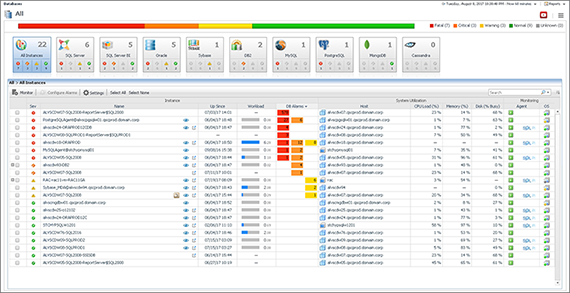
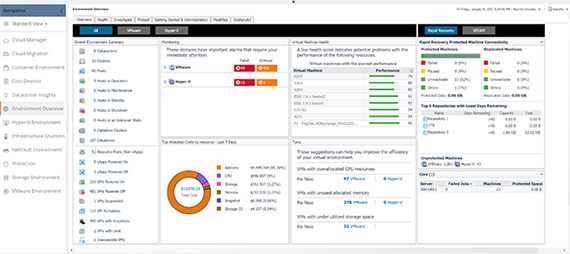
A unified web interface to monitor all legacy and modern databases (14+ platforms). Wide range of database support—cloud, on-prem, and hybrid—in a single console.
Root cause analysis suggestions, powered by AI:
Find, fix, and optimize with AI-powered insights. Our alerts tell you HOW to fix the problem, not just that it exists. Cuts your alert solve time by 40% so your teams can focus only on what matters.
Clear visibility into Snowflake spending:
Clear dashboards showing who is spending what in the cloud and where to save. Up to 30% reduction in Snowflake database spend.
Yes, Foglight fully supports cloud database monitoring and observability across on-premises, cloud, and hybrid environments—all from a single, unified platform.
Cloud database capabilities include:
- Multi-cloud visibility: Monitor cloud databases alongside on-premises systems with a consistent experience, eliminating blind spots and fragmented tooling
- Cloud cost observability: Track credit usage at query, warehouse, and account levels for Snowflake
- Cost anomaly detection: Identify over-provisioning, waste, and unexpected spend tied directly to cloud database activity
- Workload forecasting: Predict costs and resource needs to improve financial predictability and reduce the average 30% waste in cloud database bills
Foglight's cloud database performance monitoring combines real-time diagnostics with AI-powered optimization recommendations, helping FinOps teams, Data Engineers, and DBAs work from a shared view to control costs while maintaining peak database performance and availability.